dejar un mensaje
Si está interesado en nuestros productos y desea obtener más información, deje un mensaje aquí y le responderemos lo antes posible.
entregar
bandera
Hogar

cuchillas trituradoras de doble eje

cuchillas trituradoras de doble eje

  • How to Maintain and Service the double shaft shredder blades
    Feb 28, 2026
      How to Maintain and Service the double shaft shredder blades: Daily Operation and Startup/Shutdown Procedures Before Startup: Ensure the cavity is free of foreign objects, check that the blade is securely fastened and well-lubricated, and confirm that the safety protection is in good condition. For new machines, immediately retighten the blade bolts 1 hour after startup. During operation, ensure materials are fed evenly. Avoid overloading. Do not add hard items such as metal. Monitor for unusual noises. Watch the current and output. Stop the operation immediately if you detect any abnormalities. After stopping, thoroughly clean leftover materials using a brush or compressed air to reach corners. Avoid harsh cleaners at all times. Cleaning and Lubrication Cleaning: Clear materials after each shutdown. Deep-clean the blade chamber and the blade every week. Remove adhered substances to prevent corrosion and damage to the blade edge. Lubrication: Once the blade is cleaned, apply anti-rust oil to prevent corrosion. Bearings, which are the rotating supports that reduce friction within the shredder, should be lubricated with lithium-based grease of NLGI 2 grade (the standard classification for grease thickness and hardness) every 100-500 hours. The reducer, a gearbox that slows the motor's speed to increase torque, should be filled with ISO VG 320 gear oil (an industry-standard viscosity grade) every 2000 hours, with oil temperature maintained at 45-80℃. Apply thread locking adhesive (a chemical that secures threaded fasteners) when tightening bolts. This prevents the bolts from loosening due to vibration or use.   Grinding Specifications: Use a dedicated grinding machine. For each grinding pass, do not exceed a 0.1mm stroke. Maintain the original blade angle. After grinding, check for and remove burrs, and ensure dynamic balance with an imbalance of within 0.5g·cm. Keep the imbalance within 0.5g·cm after removing burrs. Avoid using water cooling. Allow the blade to cool naturally to prevent cracking. Replace the blade if the width wear exceeds the allowed limit or if chipping is observed. Use both sides of double-sided blades. For thin material, set the gap to 0.8mm. Daily: Clear waste materials. Inspect blade damage and bolts. Listen for abnormal sounds. Check lubrication. Weekly: Deep clean. Sharpen dull blades. Check clearance and parallelism. Lubricate key areas. Monthly: Comprehensive inspection for wear, calibrate clearance, replace failed blades, thoroughly lubricate, and change oil (per schedule) New machine or major overhaul: Tighten blades 1 hour after startup. Complete comprehensive inspections and clearance calibration within 72 hours.  
    LEER MÁS
  • Detailed Steps for Installing on Dual Shaft Shredder Blades
    Feb 25, 2026
    Detailed Steps for Installing on Dual Shaft Shredder Blades: 1. Safety Precautions   Turn off the power and lock it before starting. Put on cut-proof gloves and safety glasses. Get the needed tools: adjustable wrenches, thickness gauges, and rubber hammers. Clean the blade rod and nearby areas.   2. Installation Protocol   Examine the replacement blades for edge damage. Verify all positioning pins, retaining screws, and shaft threads show no deformation or wear.   Position the blades as outlined in the instructions. Clamp the blades firmly onto the shafts and align them with a uniform tooth-and-groove pattern. Tighten screws evenly to the specified torque (usually 80–120 N·m) using a crisscross pattern.   Gauge the gap with a thickness gauge: select 0.2–0.3 mm for hard items and 0.1–0.2 mm for soft ones. Ensure the gap remains constant; reset it if it exceeds 0.05 mm.   Rotate both rods by hand at least once. The blades must move smoothly and quietly—never stick, scrape, or resist—before proceeding.   3. Operational Validation and Commissioning   Run the machine without any load for three minutes at its usual speed. Watch that it stays steady: there should be no shaking, loud rubbing, or odd movements. Next, cut a sample of material under careful watch. Check that the finished size of the pieces meets the rules (for example, D90 must be less than or equal to the target level); only after this test should the machine be approved for normal work.   4. Critical Safety and Performance Notes   Never place gloved hands near rotating components—even during manual rotation.   Keep electrical power isolated until all fasteners are fully torqued, and you verify final clearance.   If the gap is not correct, blades will wear faster, get too hot, cut poorly, or cause jams in the material feed.
    LEER MÁS
  • ¿Cuáles son las razones que afectan la vida útil de las herramientas de corte en los equipos trituradores?
    Aug 10, 2023
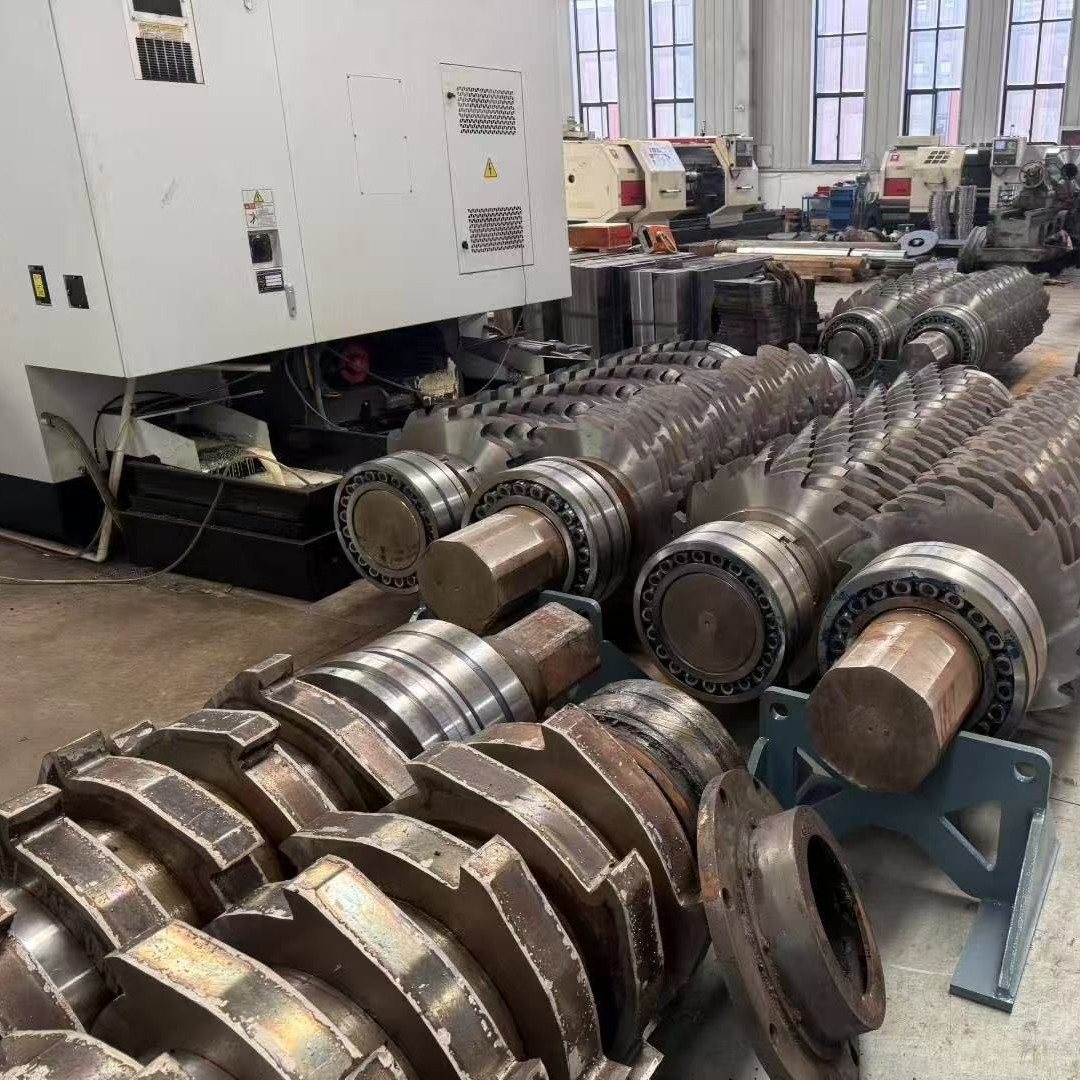
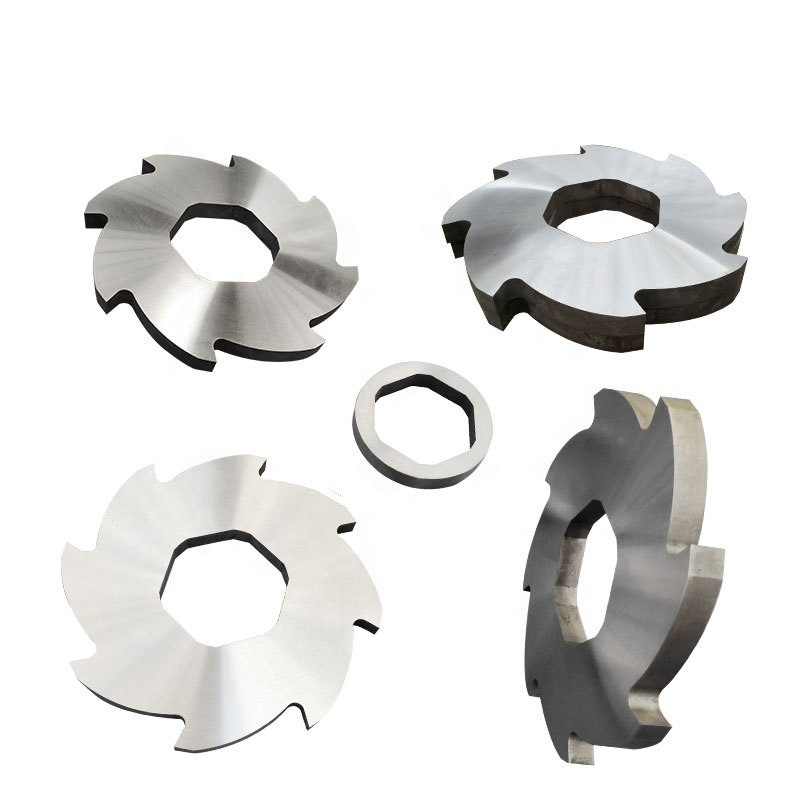
    Como componente crucial de la máquina trituradoraLa vida útil de las herramientas de corte no es solo cuestión de mantenimiento; tiene una influencia significativa en el rendimiento general y la eficiencia del equipo triturador. Una mayor vida útil de las herramientas de corte se traduce en una reducción del tiempo de inactividad, una mayor productividad y menores costos de mantenimiento.   La trituradora es una herramienta versátil capaz de triturar y cizallar una amplia gama de materiales, como tuberías de PE, botellas de plástico, madera, cables de cobre de desecho, películas de plástico, bolsas tejidas, papel, placas de circuitos, metales finos, residuos médicos, electrodomésticos usados ​​y residuos domésticos. También se utiliza en el reciclaje de vehículos y para el tratamiento de residuos domésticos.   Cuando se trata de aplicaciones, seleccionamos cuidadosamente las cuchillas apropiadas para el equipo triturador, dependiendo del tipo de residuo a reciclar. En cuanto a los tipos de cuchillos, los cuchillos también se pueden clasificar según el tipo de trituradora, de la siguiente manera: cuchillas trituradoras de un solo eje, cuchillas trituradoras de doble eje, cuchillas trituradoras de tres ejes y cuchillas trituradoras de cuatro ejes. Entonces, ¿cuáles son los principales factores que afectan la vida útil de las cuchillas de corte en los equipos trituradores? 1. Estructura de las cuchillas de corte: Esto incluye el espacio de corte, el ángulo de la herramienta y la rugosidad de la superficie del filo de la cuchilla. 2. Materias primas para herramientas de corte: selección de material trabajable para diferentes trituraciones. 3. Tratamiento térmico de herramientas de corte: Dureza de la hoja, uniformidad de dureza en la misma superficie, dureza adecuada para diferentes triturados. 4. Velocidad de rotación de la herramienta: Es decir, la velocidad de trituración de la herramienta en relación con el material; 5. Fuerza de trituración de la cuchilla de corte, que es la potencia del equipo triturador.
    LEER MÁS

Información
Ponte en contacto
Si está interesado en nuestros productos y desea obtener más información, deje un mensaje aquí y le responderemos lo antes posible.
entregar
La columna vertebral de la satisfacción del cliente

dejar un mensaje

dejar un mensaje
Si está interesado en nuestros productos y desea obtener más información, deje un mensaje aquí y le responderemos lo antes posible.
entregar
CONTÁCTENOS: wen@aclshred.com

Hogar

Productos

WhatsApp

CONTÁCTANOS